
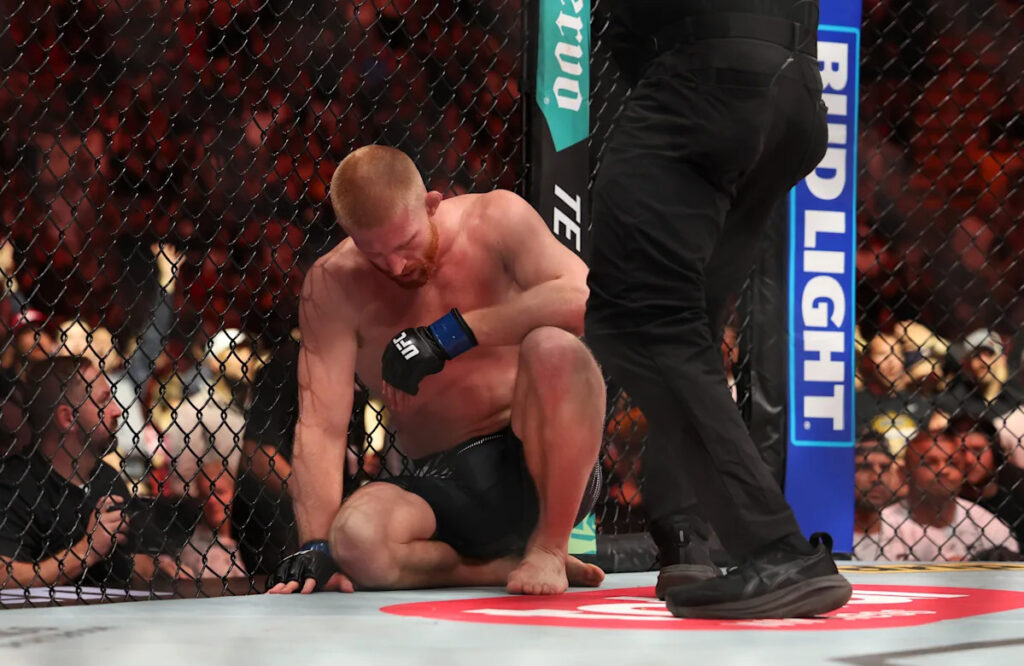
Imagine you’re a professional fighter and everything is going perfectly for you. You keep winning, adding up to a flawless record. The thrill of hearing your record followed by “…and 0” is unbeatable. Losing is just a distant thought.
But then, unexpectedly, you suffer your first defeat. The hype fades, and reality sets in. This is a common experience in the world of MMA, where even the most successful fighters eventually face defeat.
Take Rashad Evans, for example. He was a dominant force in the UFC until he faced his first loss against Lyoto Machida. The feeling of invincibility shattered, leaving him traumatized and anxious.
For many fighters, the anxiety after a loss can be overwhelming. It’s a wake-up call that changes their mindset and approach to the sport. Ben Rothwell, for instance, learned this lesson early in his career when he faced his first defeat against Tim Sylvia.
But what sets great fighters apart is how they bounce back from a loss. Anthony Hernandez, for instance, realized that he needed to prioritize his health and training over money after suffering losses in the UFC.
Ultimately, the first loss is a crucial moment for any fighter. It’s a test of resilience and determination, shaping their future in the sport.
In the world of mixed martial arts, learning from losses is a crucial part of growth and development. Retired UFC welterweight Matt Brown understands this well, having experienced his fair share of defeats. He emphasizes the importance of allowing oneself to feel sadness and disappointment after a loss, while also maintaining the right mindset to move forward and improve.
Brown’s perspective on losses is echoed by former UFC champion Rashad Evans, who learned valuable lessons from his defeat to Lyoto Machida. Evans realized that losses are an integral part of success, as they reveal mistakes that may go unnoticed in victory. This introspection not only helps fighters correct their flaws, but also keeps their confidence in check.
For up-and-coming fighters like Bo Nickal, who recently suffered his first loss, Evans advises a similar approach. Analyzing both wins and losses allows fighters to stay humble and continuously improve their skills. It’s easy for success to breed arrogance, but staying grounded and self-aware is essential for long-term growth in the sport.
In the competitive world of MMA, victories can sometimes mask weaknesses and hinder progress. Embracing losses as opportunities for growth and self-improvement is key to long-term success in the sport. By learning from defeats and staying humble in victory, fighters like Nickal can continue to evolve and reach their full potential in the Octagon.