
Many NBA players face the harsh reality that they may never be the best player on a championship team. The level of talent required for that status is rare, leaving a large group of players at a crossroads.
The playoffs can be a humbling experience, exposing weaknesses that may have been overlooked in the regular season. Some players use this as motivation to improve, while others struggle to adapt to a new role.
While some players are not suited to be the main option on a great team, there are opportunities for those willing to embrace a different role. Players like Brook Lopez and Al Horford have found success as secondary options on championship teams by sacrificing individual shine for team success.
Aaron Gordon exemplifies the transformation from struggling leading man to role player, thriving in Denver by focusing on defense and adapting to a new offensive role. His evolution has been crucial for the Nuggets’ success.
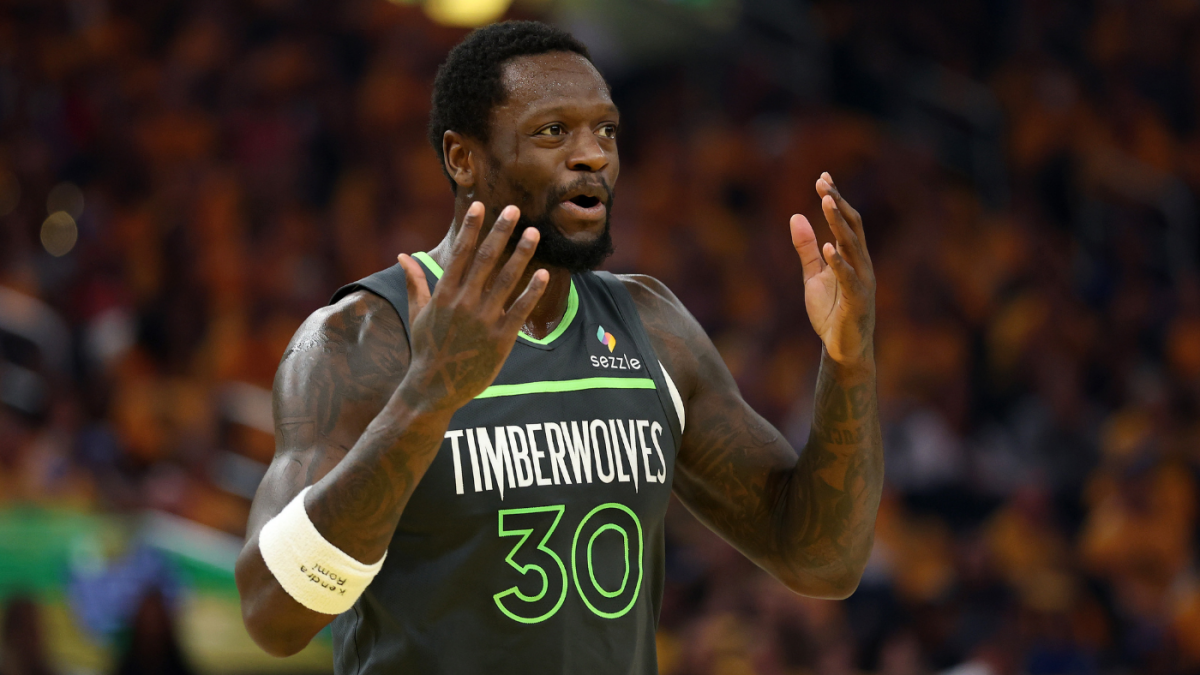
Julius Randle is also showing signs of transformation in Minnesota, embracing a supporting role after struggling in past postseasons. His ability to adapt and contribute in a new role is impressive.
During the early part of the season, Randle’s performance was at its worst, leading Timberwolves fans to plead for the team to trade him before the deadline. However, as the season progressed and especially in the playoffs, Randle has embraced a new role as a facilitator and opportunistic scorer, resulting in the best playoff performance of his career. He is now averaging 23.3 points and 6.0 assists per game on 60.2% True Shooting, a significant improvement from his previous playoff performances with the Knicks.
Randle appears more comfortable and decisive in the Wolves’ system, showing a willingness to attack the basket more frequently. His shot selection has also evolved, with a higher percentage of attempts coming from inside 10 feet from the rim. This change has led to a better overall performance, with Randle excelling at finishing at the rim and eliminating inefficient long twos and deep midrange shots.
This transformation in Randle’s game has shifted the playoff narrative surrounding him and highlighted the impact of the right situation and player buy-in. The Knicks’ offensive style did not suit Randle’s strengths, but the Wolves have unlocked his potential by allowing him to adapt to a new role. As a result, both Randle and the team are benefiting from his improved play.
In a league where teams are increasingly cautious about bad contracts and value playoff performance, Randle’s success serves as a blueprint for finding undervalued players who can contribute to championship-caliber teams. The postseason exploits of players like Lopez, Horford, and Gordon have paved the way for a new approach to player evaluation, focusing on proven playoff impact rather than regular-season statistics.
Looking ahead, teams will be keen on identifying the next breakout player who can excel in a specific role and make a significant impact in the postseason. As players like Randle continue to thrive in the right environment, the importance of finding the right fit and maximizing player potential becomes even more crucial in building a contender. following sentence:
The cat was chasing the mouse around the house.
The cat was running after the mouse throughout the house.